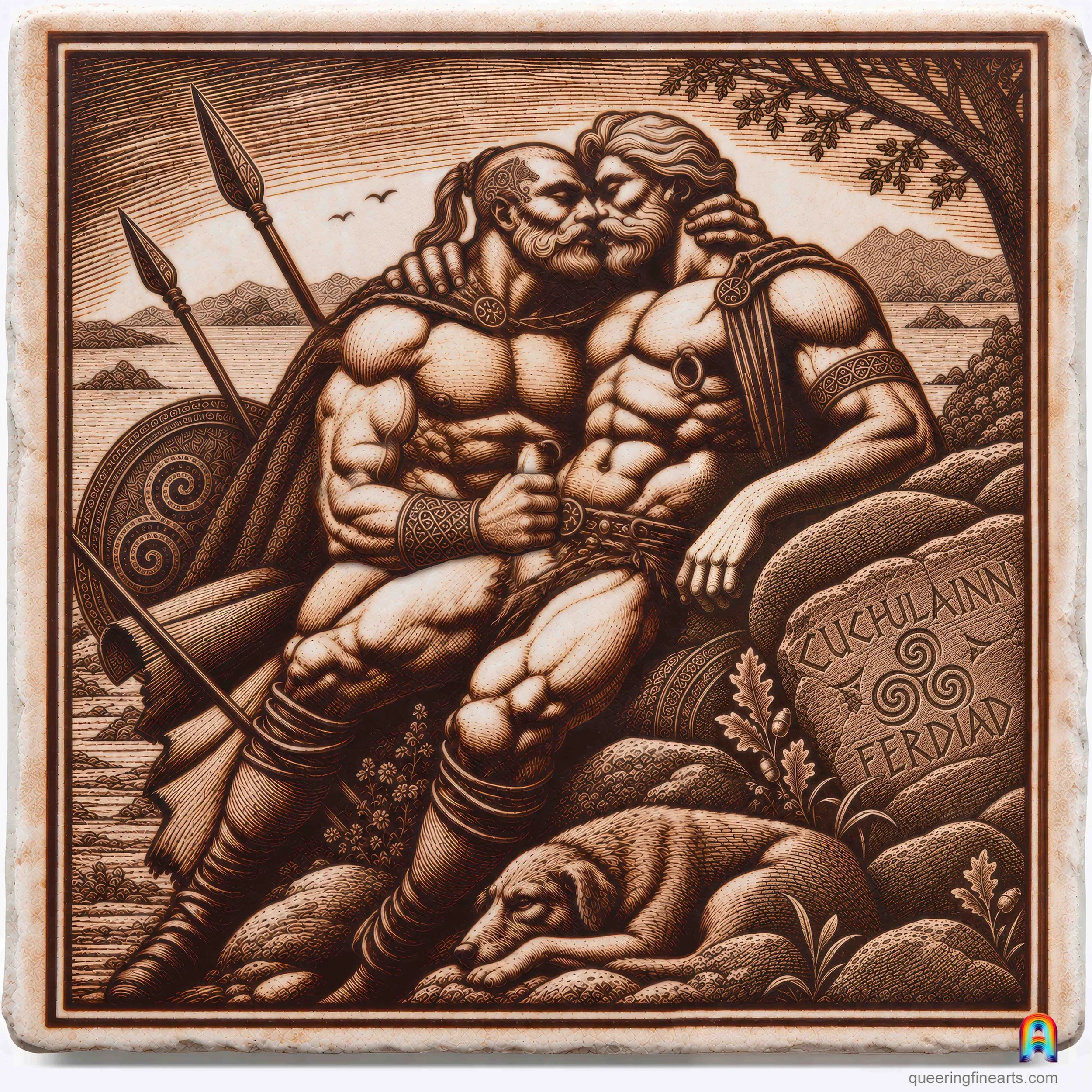
Cúchulainn and Ferdiad
Illustration from The Gay History and Legends of the Celtic Peoples
Engraving, c. 1870
The Celtic Antiquarian Archives
In Arms
Cúchulainn and Ferdiad: A Queer Retelling of an Ancient Celtic Tale
Gentlemen, here is a page of history in which you shall be told of two warriors, of an ancient people, of a friendship rather more tender than warriors are usually allowed, and of a battle that ended very badly indeed.
But this is our telling of the tale.
So gather round.
Long before Ireland was Ireland as we know it, its poets told of heroes who inhabited a world poised somewhere between history and legend. They feasted in great halls, crossed wild country in chariots, fought for cattle and kingdoms, and measured a man's worth by courage, loyalty and prowess in battle.
Among the greatest of them was Cúchulainn, the young champion of Ulster.
His story belongs to the Ulster Cycle, a body of Irish heroic literature whose most celebrated tale is the Táin Bó Cúailnge, the Cattle Raid of Cooley. The stories were written down by medieval Christian scribes, but much of the material they preserved came from a considerably older oral tradition.
Cúchulainn had learned the arts of war far from home, in Alba, the ancient name associated with Britain and later Scotland. There, under the formidable warrior-woman Scáthach, he trained beside another young champion.
His name was Ferdiad.
They fought together. They travelled together. They slept together.
And they loved one another.
Precisely what that love meant has been debated by people separated from the two warriors by many centuries and possessing a remarkable desire to decide where friendship ends and something else begins. The old tale itself is rather more generous. It remembers two men sharing a bed. It remembers Cúchulainn calling Ferdiad his beloved companion. And when circumstances eventually force them to fight one another, it has them stop, put their arms around each other's necks and exchange three kisses.¹
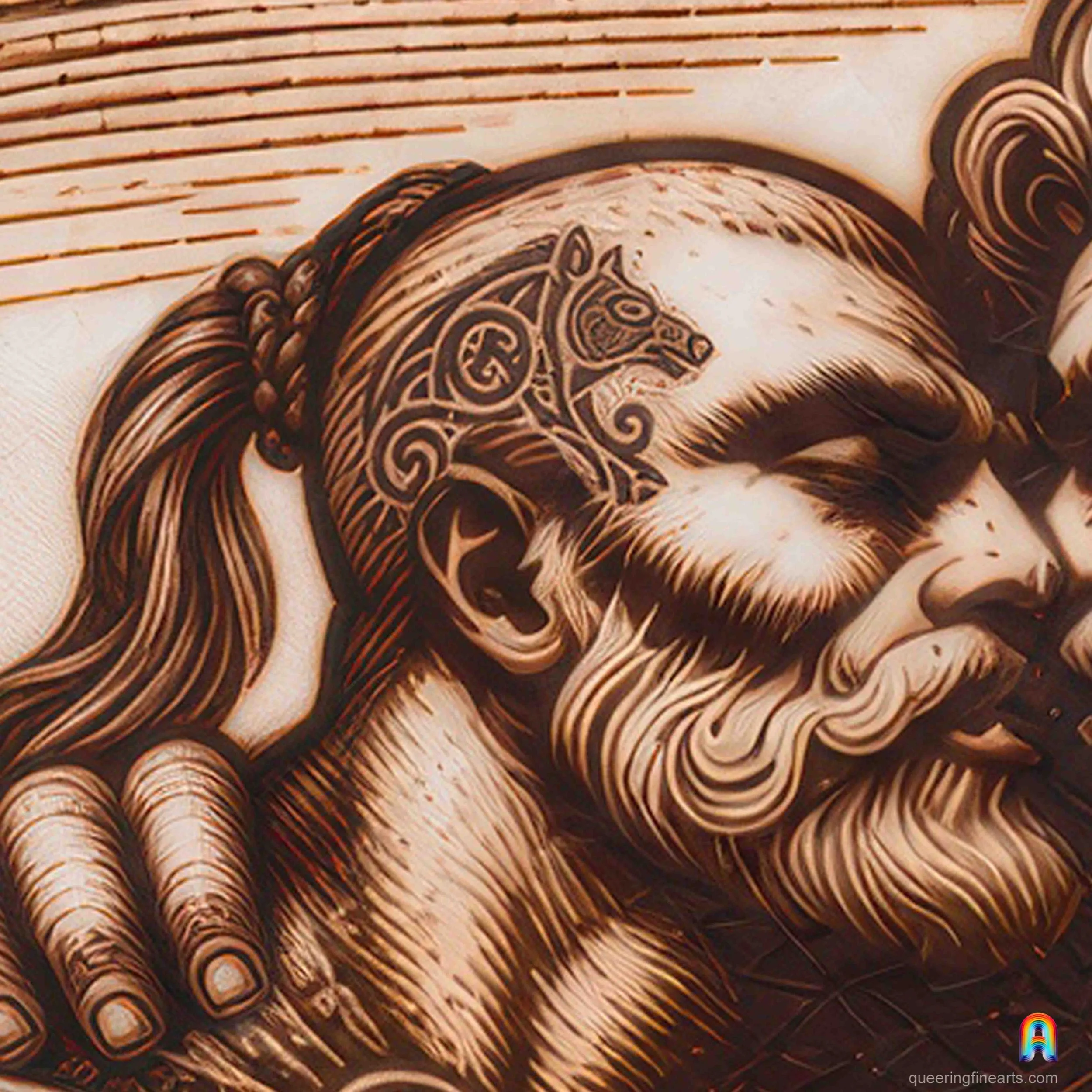
Such tenderness between warriors need not have seemed quite as extraordinary in the ancient Celtic world as later centuries might suppose. Greek and Roman writers, observing Celtic peoples through their own inevitably foreign eyes, repeatedly commented upon sexual relationships between Celtic men. Diodorus Siculus, writing in the 1st century BC, was particularly explicit: Celtic men, he claimed, took male lovers to their beds and could even regard the rejection of their advances as an insult.² Whatever prejudices coloured the classical account, it nevertheless provides striking evidence that desire between men was part of the Celtic world.
And so our two warriors loved each other in a world where men could be fierce without surrendering tenderness.
Unfortunately, this is an heroic tale.
And heroic tales have an appalling habit of ruining perfectly good love stories.
Years later, during Queen Medb's great invasion of Ulster, Cúchulainn stood almost alone against her army. Warrior after warrior was sent against him. Eventually Medb turned to the one man who might equal him: Ferdiad
The lovers were to meet at a ford.
For days they fought. At night their hostility dissolved. Medicines sent to heal Cúchulainn were shared with Ferdiad. Food sent to Ferdiad was shared with Cúchulainn. Their horses remained together. Their charioteers shared a fire. And after laying down their weapons, the two wounded warriors embraced and kissed.
Then morning came, and the world required them to become enemies again.
The old story tells us what happened next.
Cúchulainn killed Ferdiad.
We have never been particularly obedient to old stories.
So here, gentlemen, the story takes a small and deliberate turn.
The weapons fall.
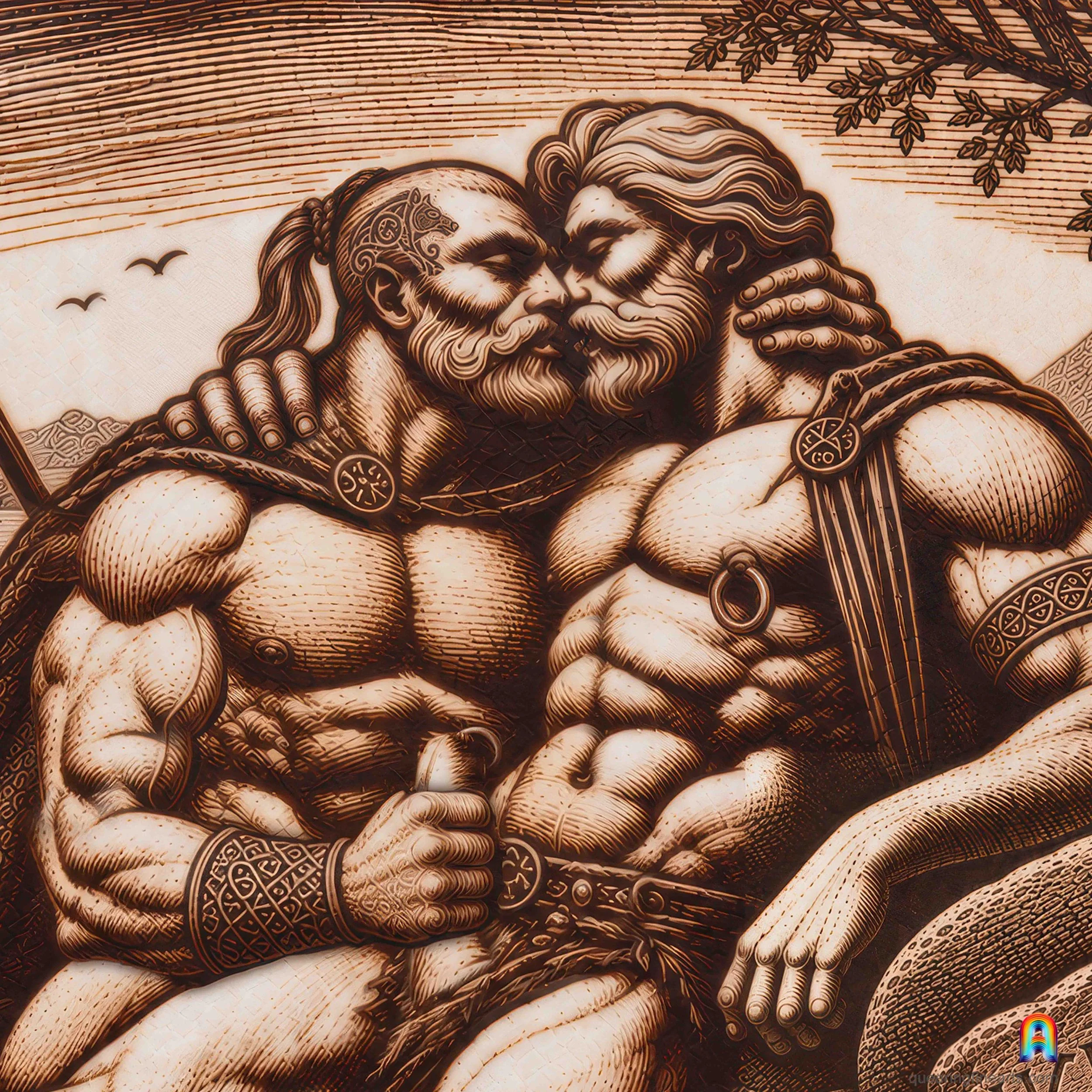
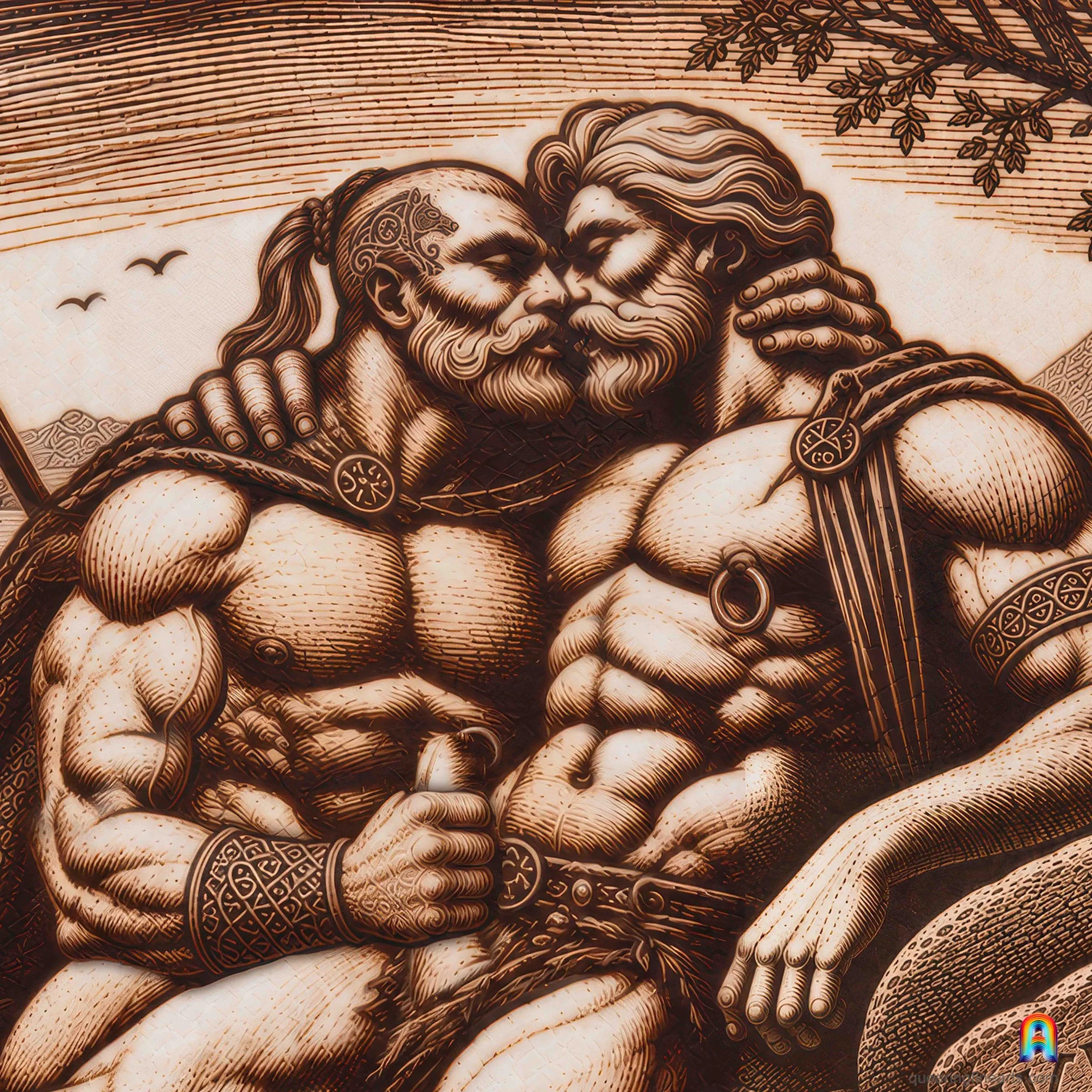
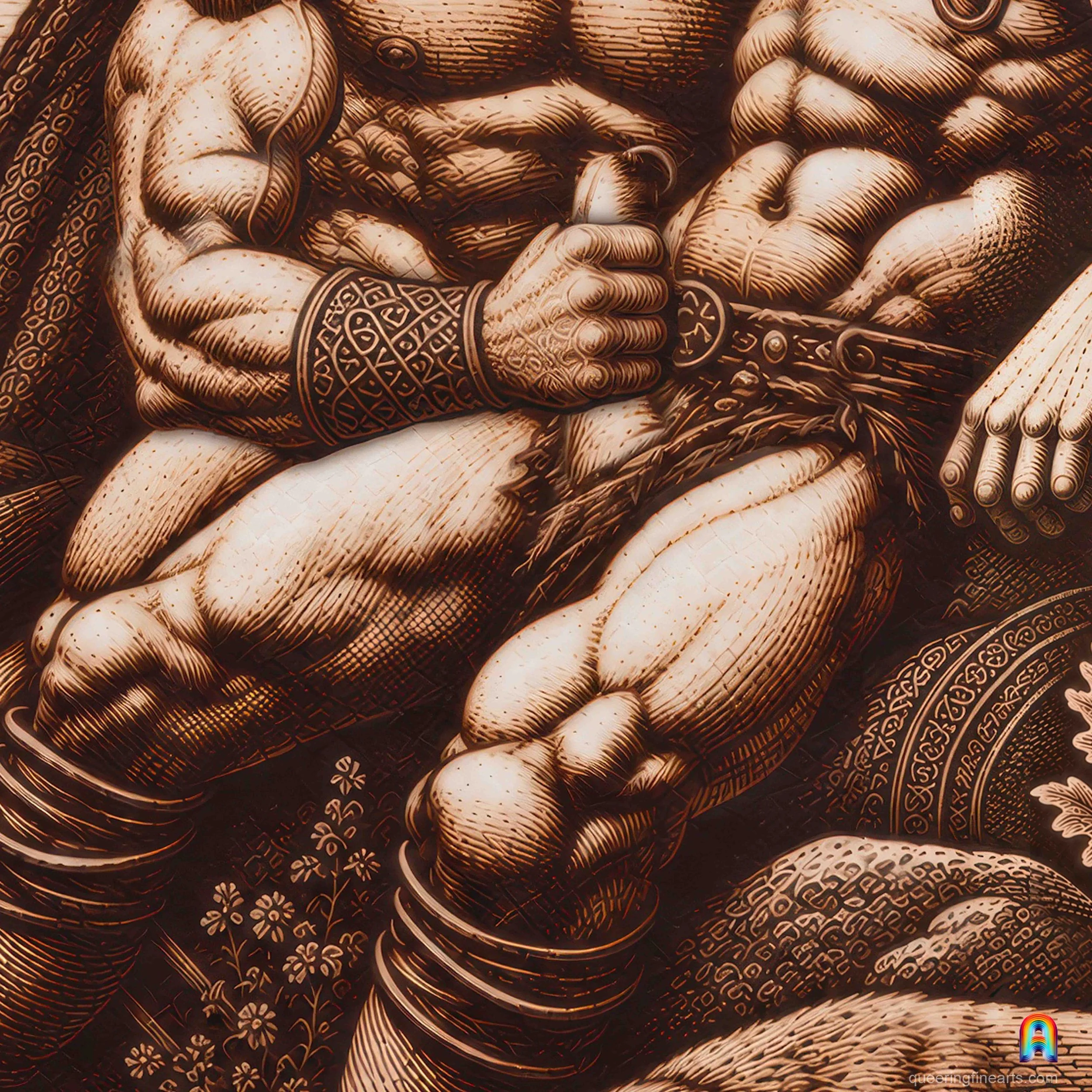
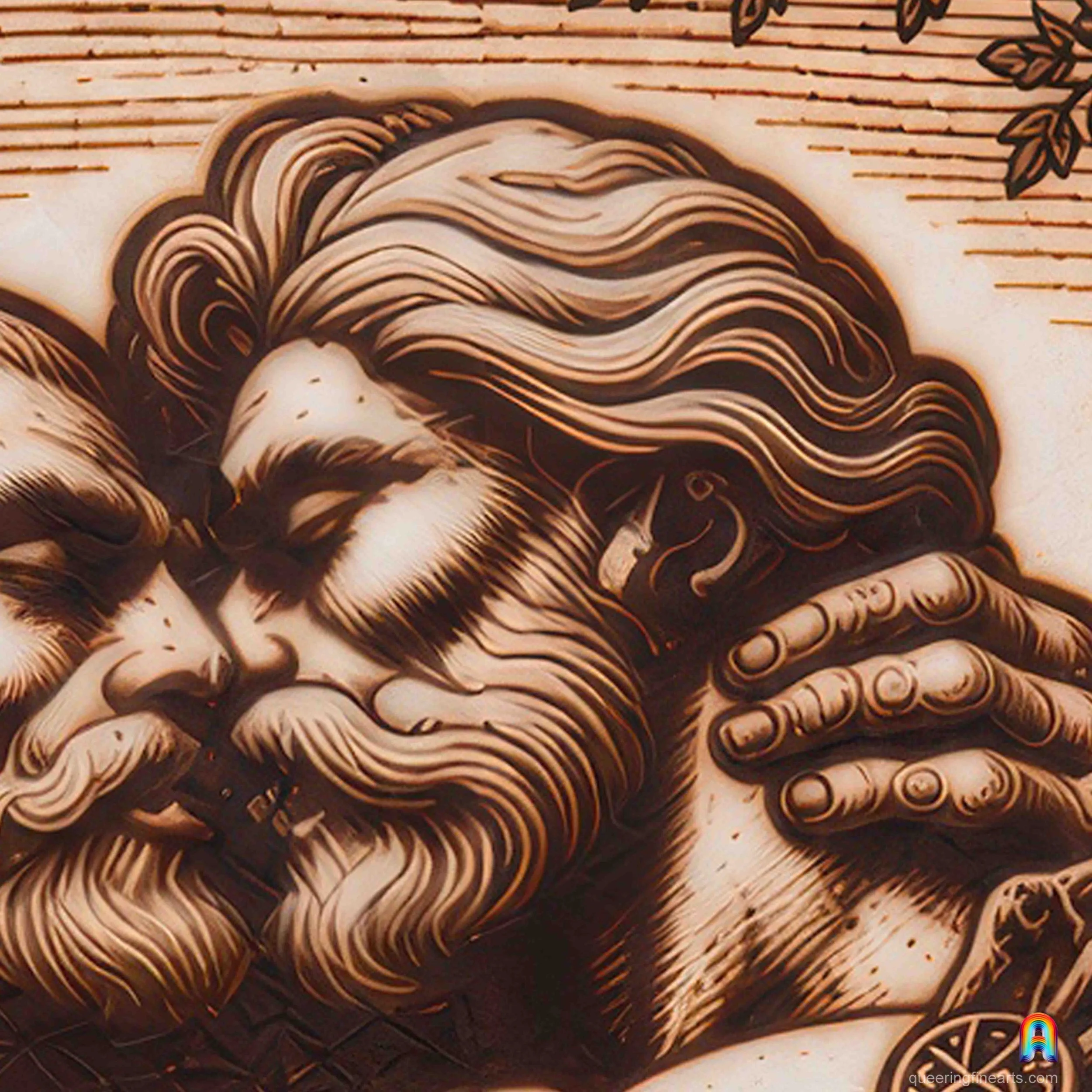
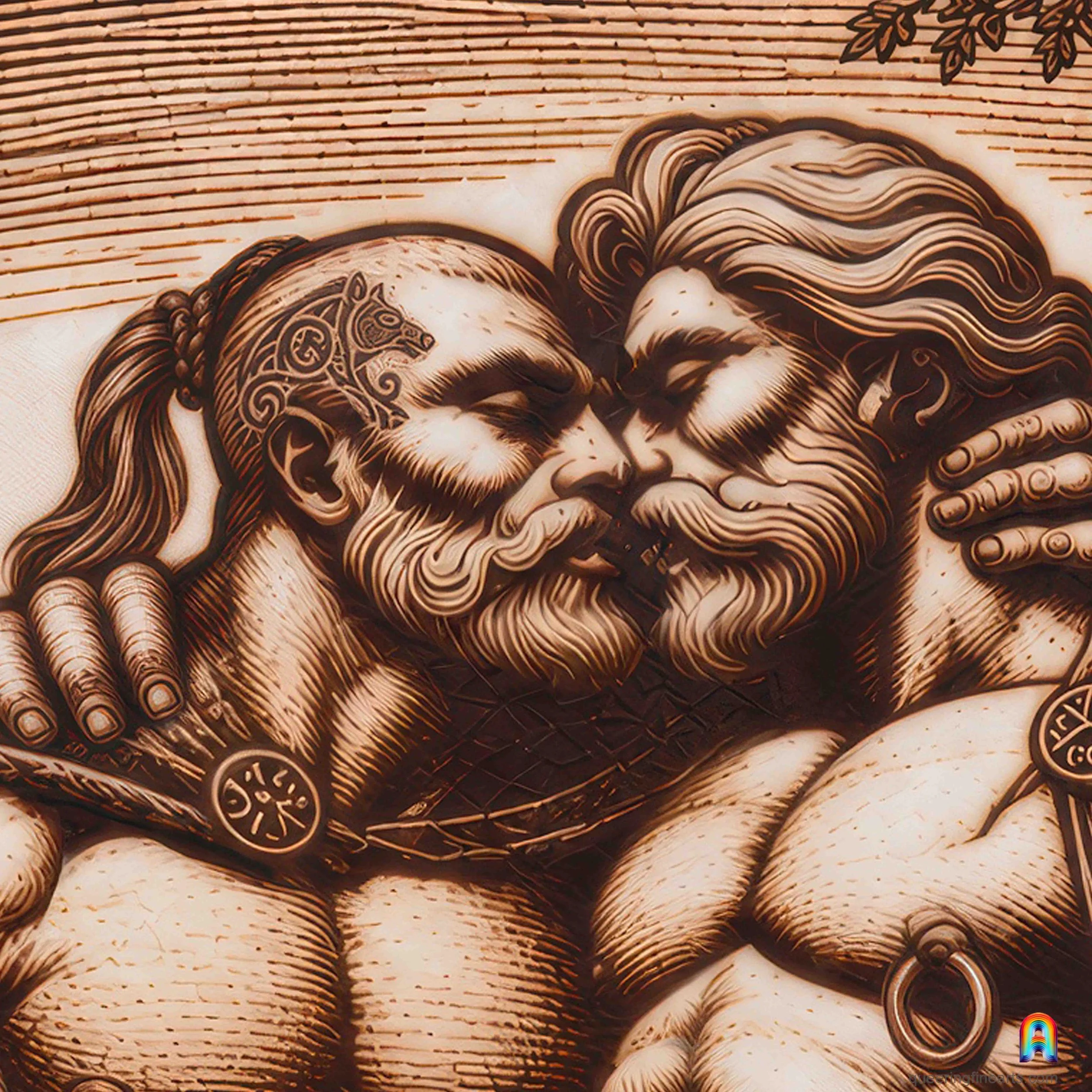
Ferdiad approaches the man who has been his companion, his equal and his lover. Cúchulainn reaches for him. One arm passes around Ferdiad's waist, the other around his neck. Their foreheads meet.
And this time, when they kiss, neither man reaches again for his weapon.
Let Queen Medb find another champion
Let the poets complain.
Our lovers have better things to do.
QFA
The objects tell the story too
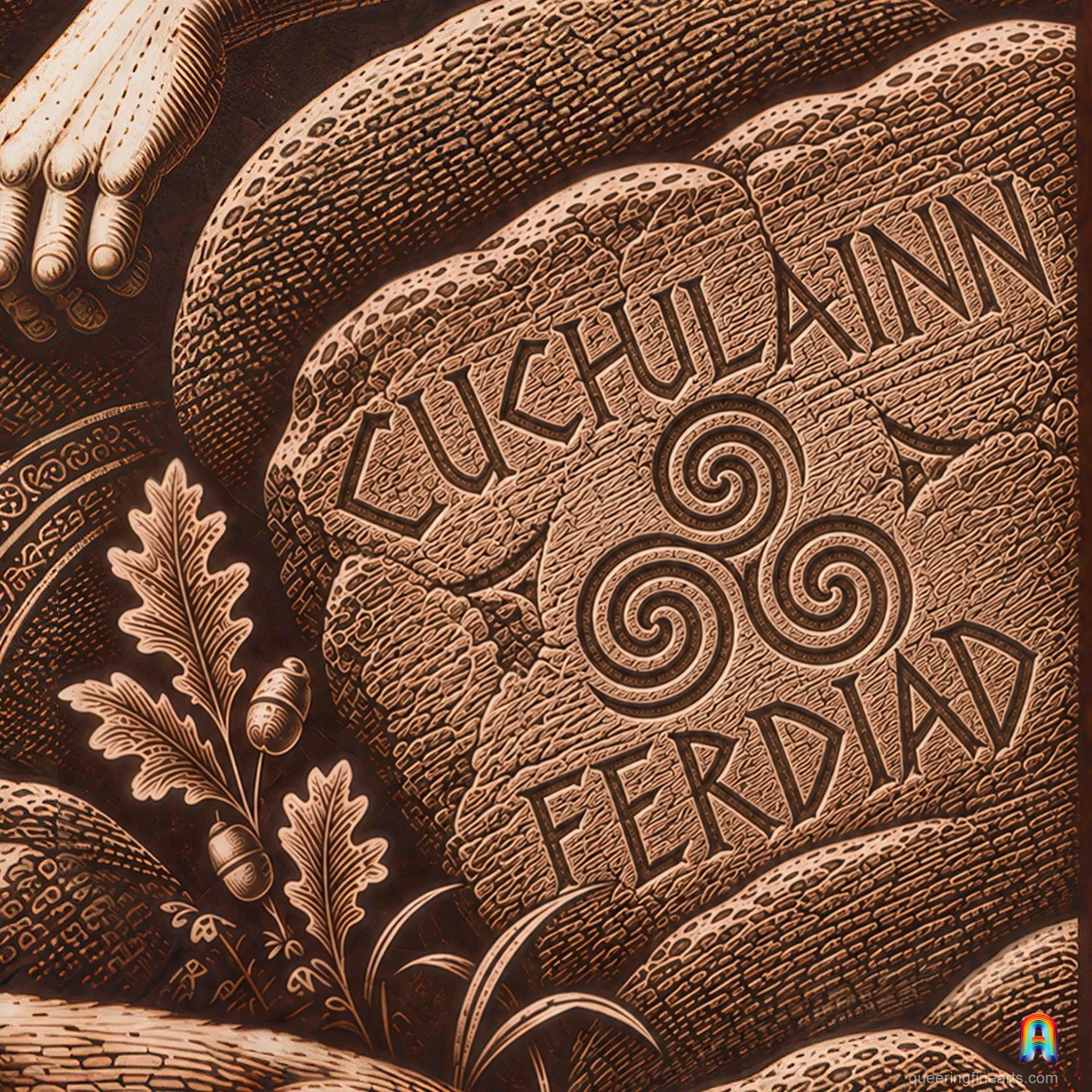
Almost everything surrounding Cúchulainn and Ferdiad belongs to their world and helps tell their story.
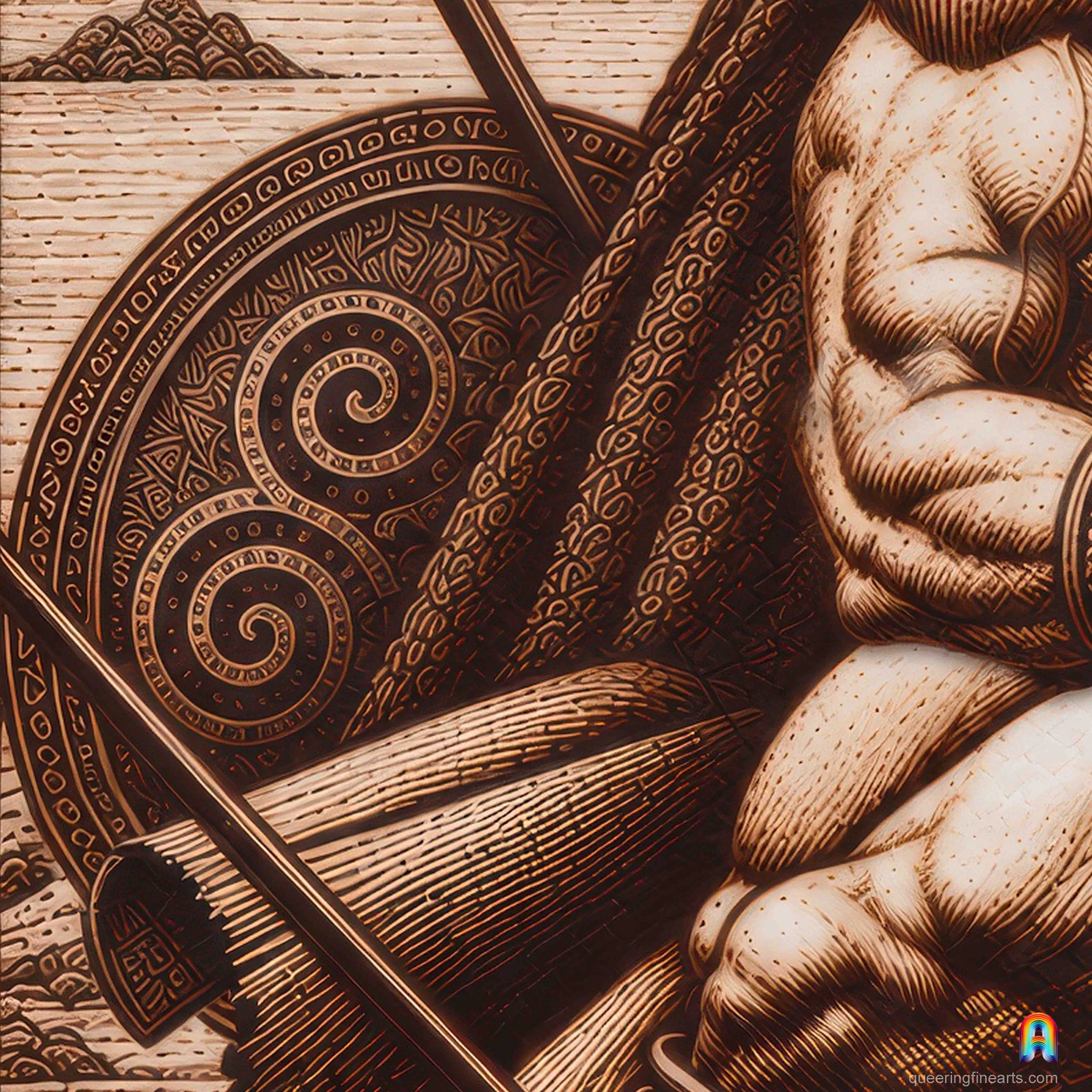
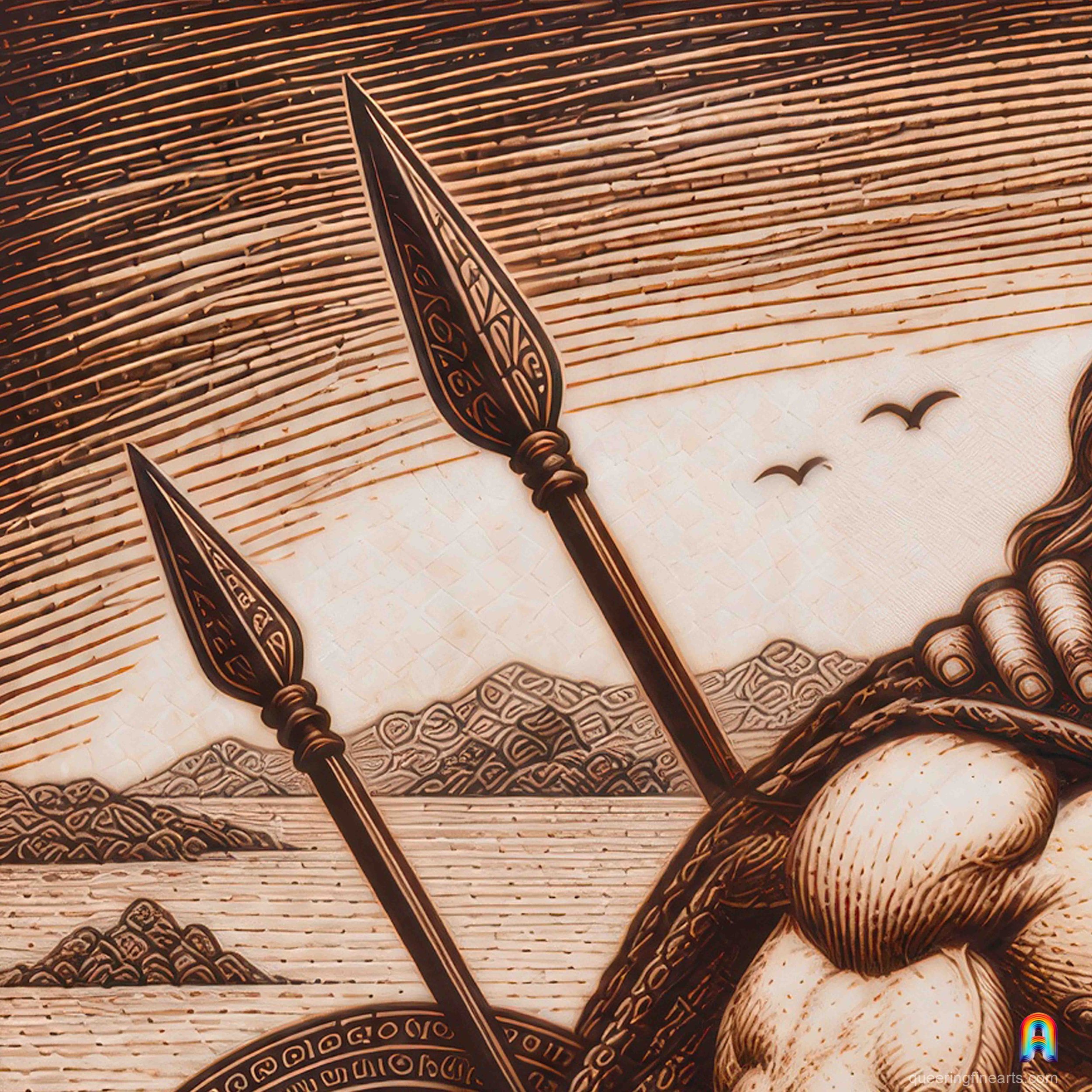
The spears and shield recall the two celebrated warriors and the combat that was meant to divide them.
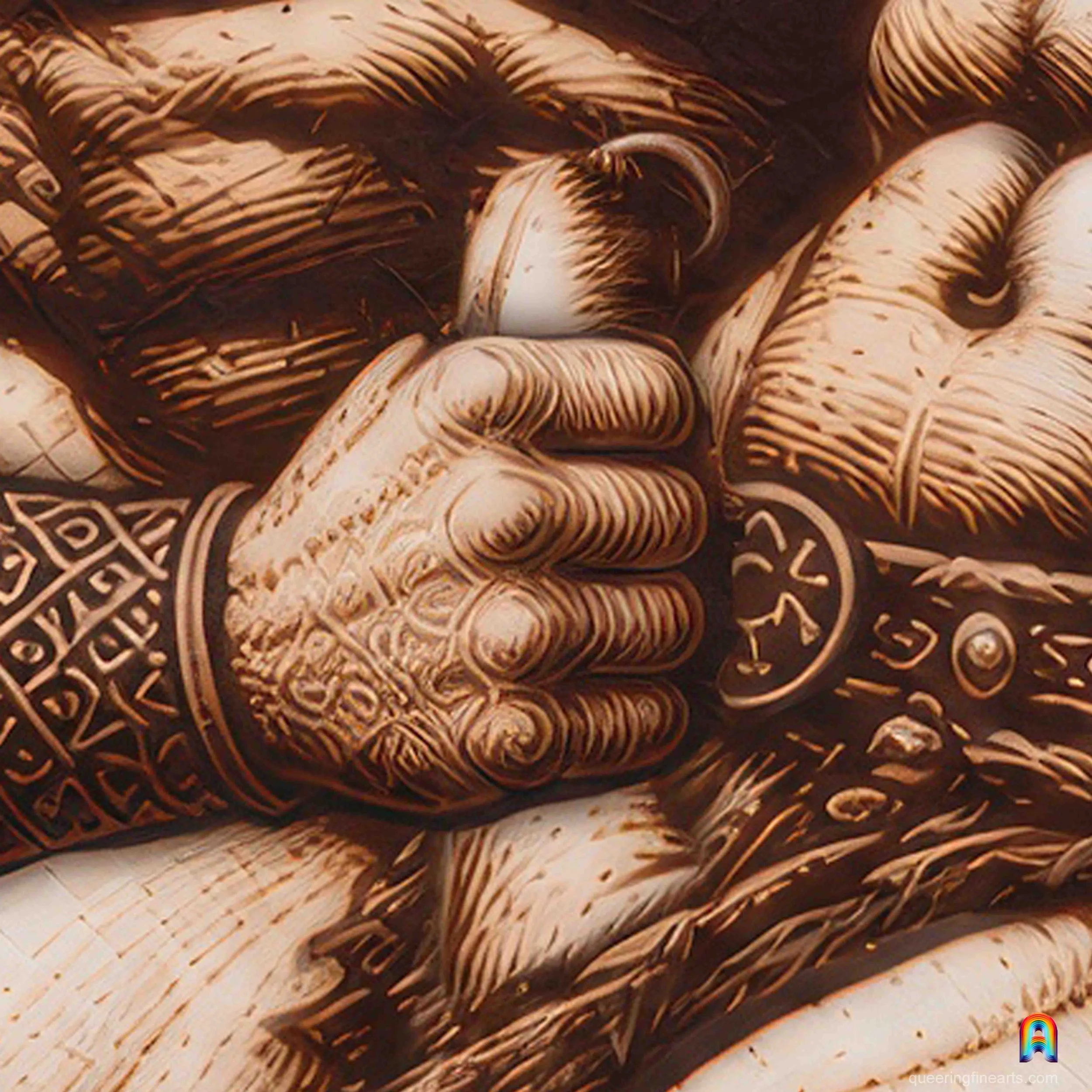
The firmly held, virile cock leaves no doubt about their sexual attraction.
The spirals and Celtic ornament on their weapons, clothing and jewellery root the imagined scene in the visual language associated with ancient Celtic culture.
The hound refers directly to Cúchulainn himself: his name means approximately the Hound of Culann, a title earned in youth after killing Culann's formidable guard dog and offering to take its place until another could be raised.³
Finally, the weathered stone bearing their names transforms the rocky landscape into a kind of monument. Instead of commemorating Ferdiad's death, it commemorates the two men together, while the triskele between their names gives the invented memorial an unmistakably Celtic character.
Curiosity Piqued?
1. Joseph Dunn, trans., The Ancient Irish Epic Tale Táin Bó Cúalnge, London, David Nutt, 1914, chap. XX, “The Combat of Ferdiad and Cuchulain”; see also Tom O’Donnell, Fosterage in Medieval Ireland: An Emotional History, Amsterdam, Amsterdam University Press, 2020. Dunn provides an accessible translation of the great confrontation between Cúchulainn and Ferdiad, including the exchanges that reveal the depth of their attachment before the duel. O’Donnell offers a modern historical exploration of fosterage in medieval Ireland and is particularly useful for understanding the intense emotional bonds created between foster-brothers. Neither source identifies Cúchulainn and Ferdiad as homosexual lovers, but together they reveal just how intimate, emotionally charged and physically expressive relationships between men could be within the world from which their story emerged.
2. Diodorus Siculus, Library of History, V.32, trans. C. H. Oldfather, vol. III, Cambridge, Mass., Harvard University Press, Loeb Classical Library, 1939. Diodorus offers one of the most striking classical accounts of sex between men among peoples whom Greek writers grouped among the Celts, describing men as openly offering themselves to other men and treating such encounters as unremarkable. The passage is especially valuable to queer readers because male homosexual behaviour appears here not as a modern projection onto the ancient Celtic world, but in an ancient testimony. It must nevertheless be read critically as Greek ethnography written about other peoples rather than as a transparent record of Celtic sexual life.
3. Thomas Kinsella, trans., The Táin: From the Irish Epic Táin Bó Cuailnge, Oxford, Oxford University Press, 1969, pp. 76-82. Kinsella’s celebrated modern translation brings the relationship between Cúchulainn and Ferdiad vividly to life: shared training, loyalty, tenderness, bodily closeness and devastating grief inhabit a heroic world in which bonds between men could carry extraordinary emotional weight. The Táin does not call the two warriors homosexual lovers. What it does offer is something more interesting for our purposes: an ancient relationship between men whose intensity leaves ample room for a queer retelling without requiring us to disguise invention as history.