

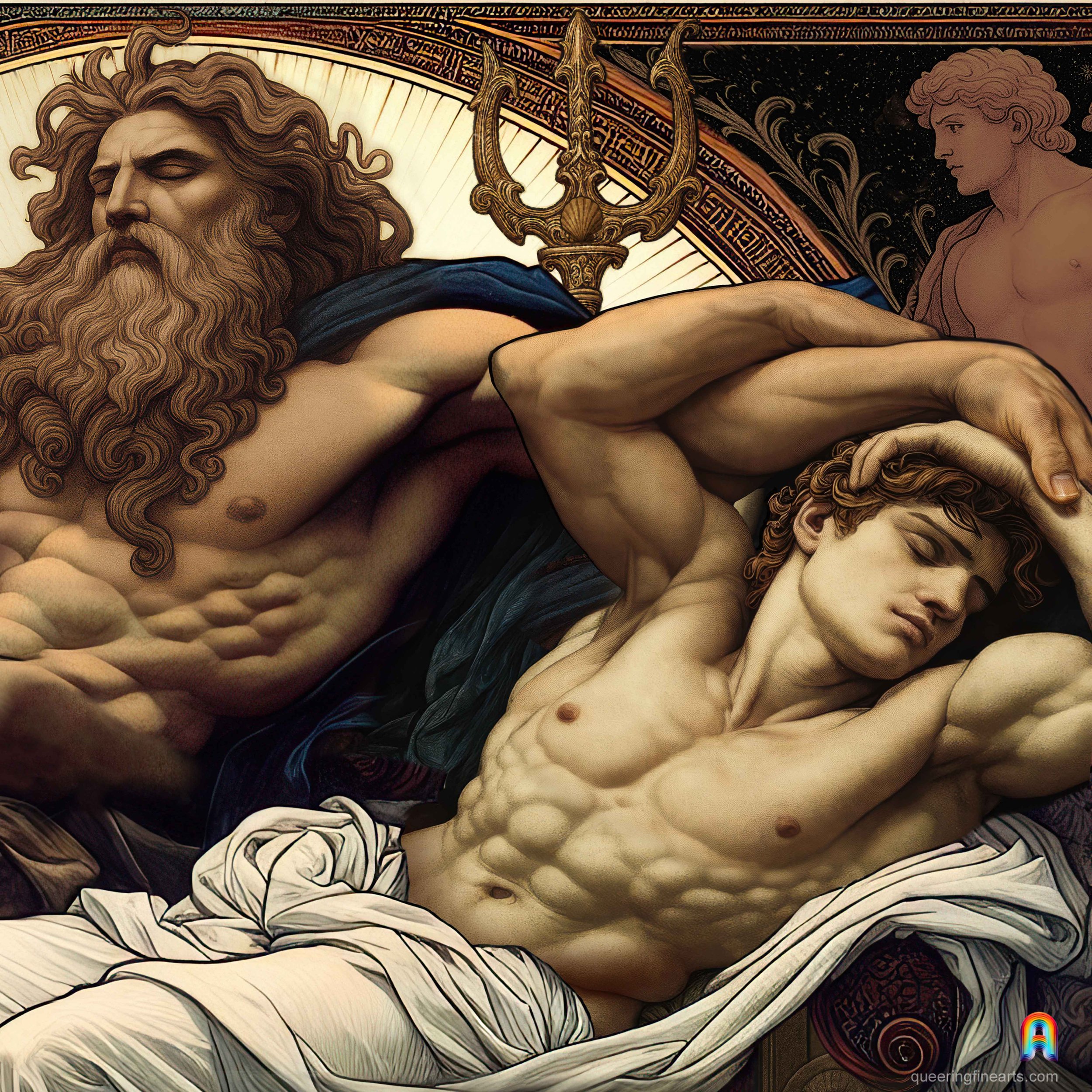
Prague around 1900: Outline of a Homosexual History
If Prague’s homosexual history seems less immediately visible than that of Paris, Berlin or Vienna, it is not because queer life was absent there, but because it left behind fewer monumental traces and more scattered ones. Its memory survives in police records, newspapers, literary journals, coded fiction and private circles rather than in already consecrated narratives. Around 1900, Prague was nevertheless far from a void. It was a city of fleeting recognitions, of public cruising grounds, of scandal made visible through repression, but also of literary and aesthetic milieus where desire between men could be named, stylized and cautiously shared. What long obscured this history was not its nonexistence, but the dominance of national, moral and political frameworks that rendered it less tellable. Prague did not lack a homosexual past. It lacked, for a long time, the conditions that would allow that past to be read, transmitted and spoken aloud.
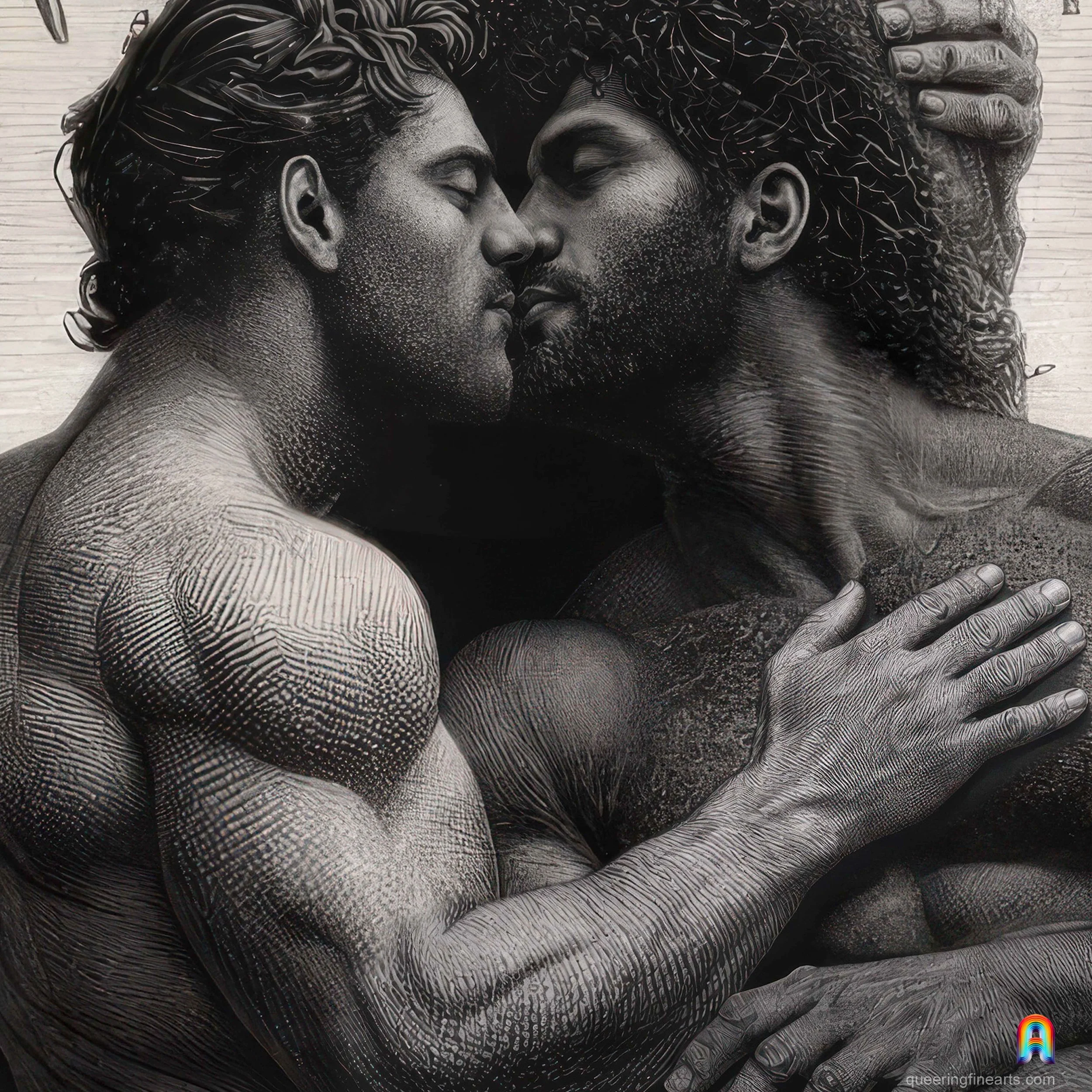
A Natural Sexuality
Sometimes entire societies are dispossessed of their own history, not through forgetting, but through the will of those who subdued them. The encounter between Europe and the Americas was not an exchange, but a conquest. In that movement, Indigenous understandings of the body and of sexuality, fluid, woven into social life, depicted without shame, were swept aside. A Christian sexual order imposed itself through brutal force, relegating to the status of “savagery” practices whose only crime was to belong to the defeated. What was destroyed was an entire way of being in the world, of which only fragmentary traces remain today, filtered through the very gaze of those who annihilated it.
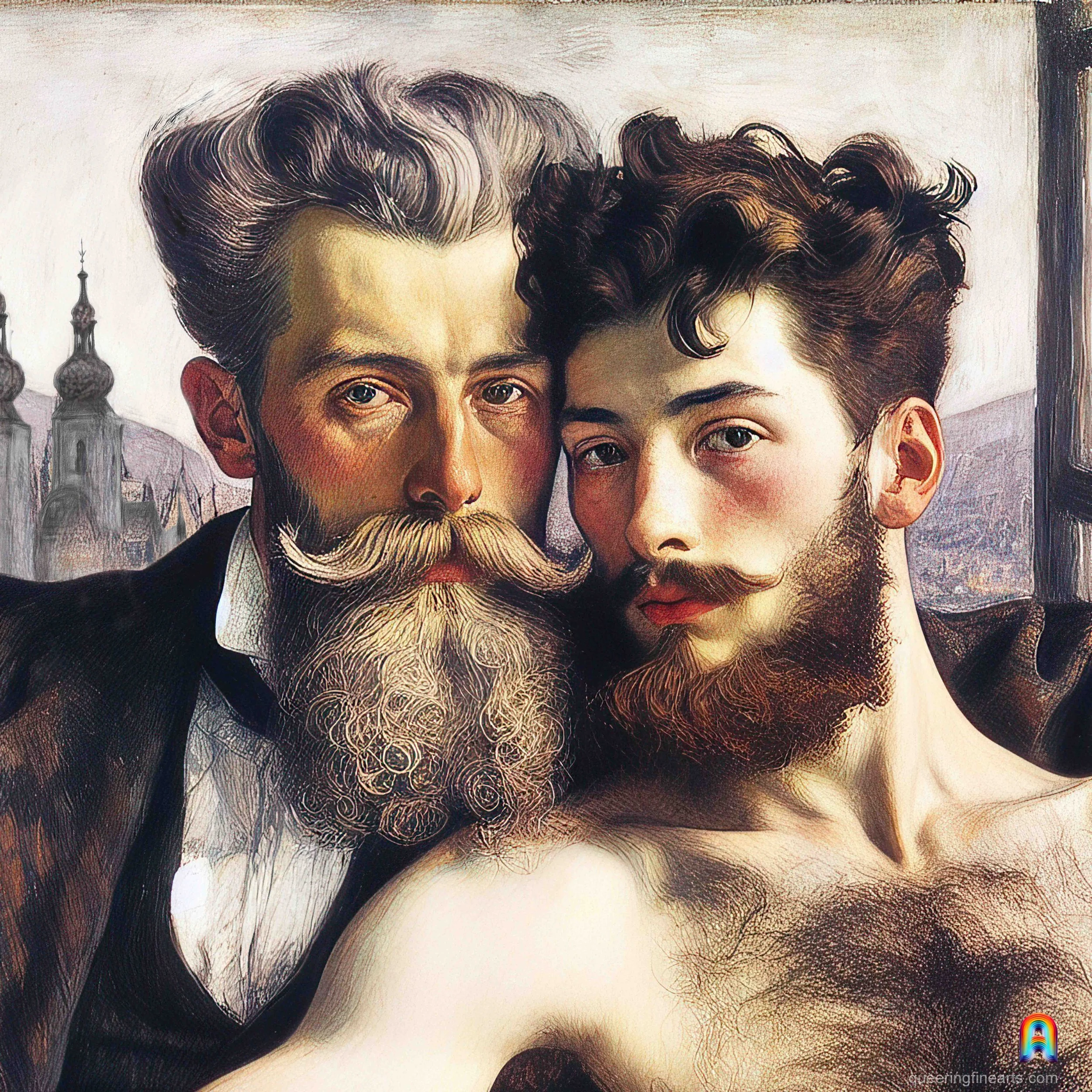
Belle Époque Vienna
Around 1900, Vienna emerges as a crucible in which male homosexuality is rethought under the pressures of repression and modernity, as psychoanalysis, literature, and the visual arts begin to transform what was once unspeakable into an object of thought, image, and interpretation, laying foundations that would shape Western queer history far beyond Austria.

Remembering Forgotten Desires
At times, a caress, a glance, or a burst of shared laughter survives only in the memory of a single person, fragile and fleeting like a flame in the wind. Every intimate recollection is precarious by nature: it belongs only to those who lived it. Yet when it comes to moments of closeness between men, this fragility was compounded, over the centuries, by a merciless threat for anyone who might have preserved the record: society’s censorship. These memories were not only destined to vanish with those who carried them, but whatever might have borne witness was systematically cast out of collective remembrance.

The Inextinguishable Male Desire in Western Art
The history of painting and the representation of homosexuality in art reveals a complex evolution, shaped by the social, cultural, and religious contexts of each era. This overview focuses mainly on Western art, while reminding us that forms of love and tenderness between men have always existed, whether in broad daylight or in the intimacy of private spaces.
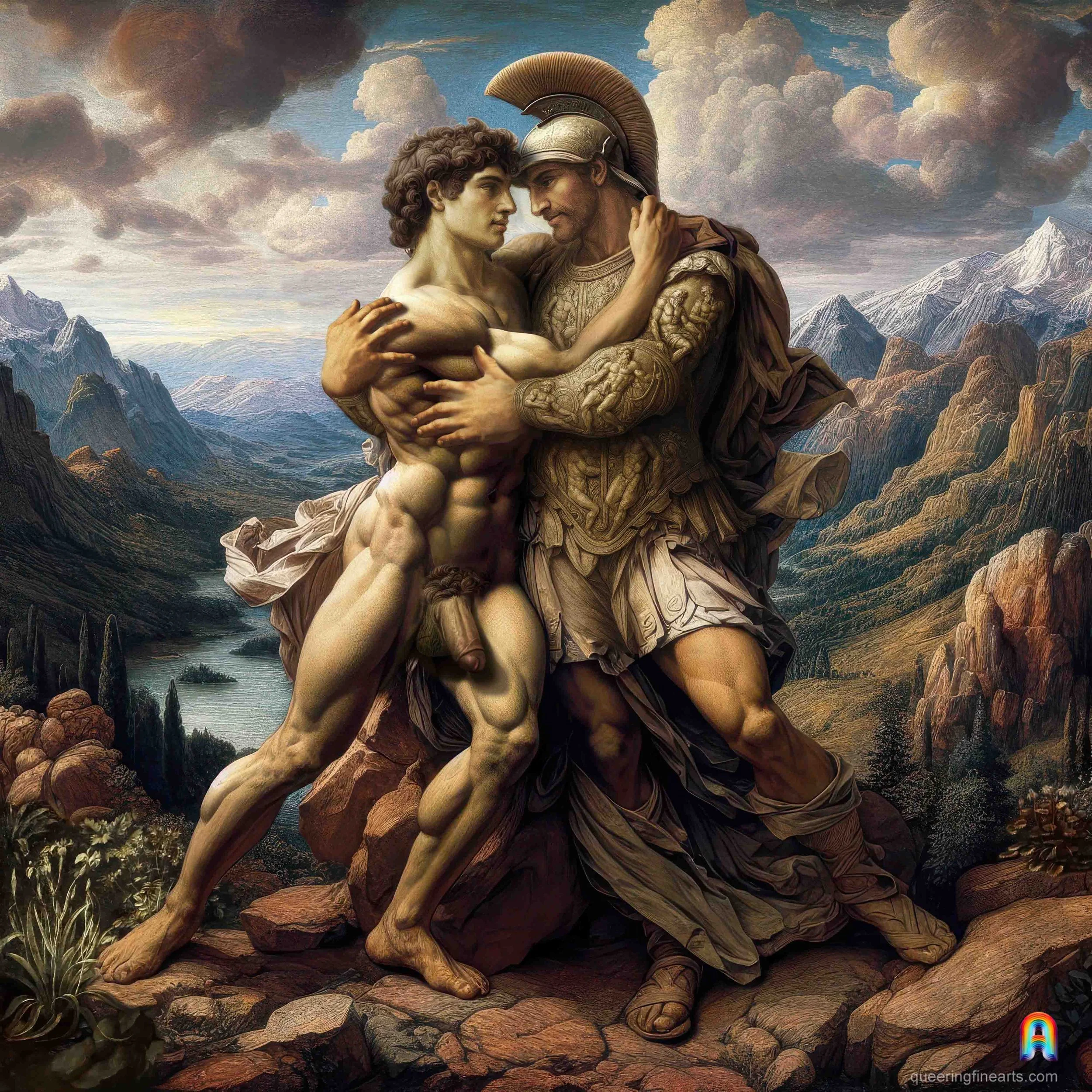
Coded Masculinities, Diverted Masculinities
In the visual culture inherited from the Renaissance, the nude male body became the absolute norm, exalting strength and heroism while repressing fragility and intimacy between men. This legacy, carried through academic art and media, confined gender into reductive roles.

Inventing the Nonexistent: From Erasure to Queer Empowerment in Visual Culture
To fill the silences imposed by heteronormative oppression, I draw on the visual heritage that has been passed down and imagine the works that history never allowed to come into being. The in-depth version of what expresses my vision as an artist and art thinker is presented here. On my website, it appears in a slightly different form, under the heading “My Vision.”